

The Unsung Heroes: Navigating Sail Canada’s Race Management Programme

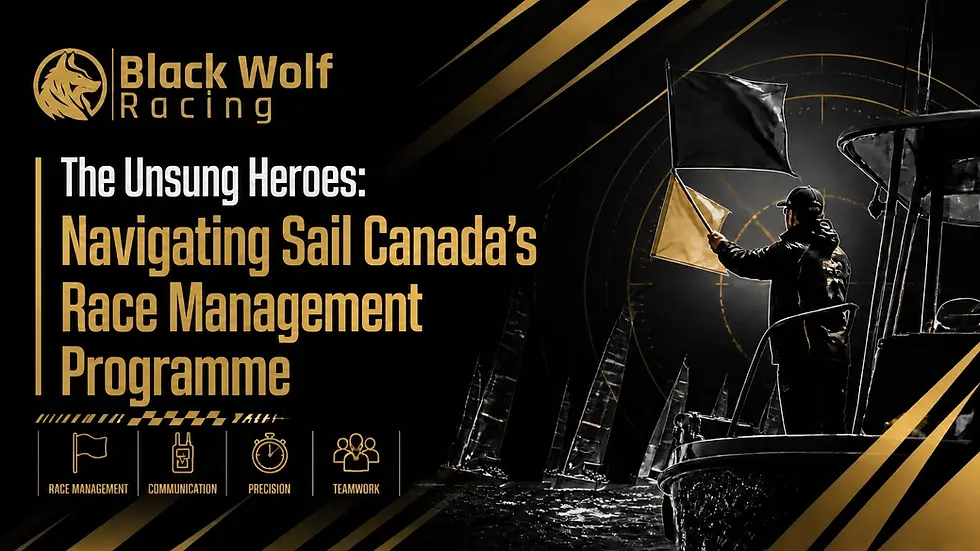
Racing is more than just a contest of speed and tactics between boats. Behind every starting horn, every perfectly laid mark, and every recorded finish time is a team of dedicated professionals. We call them the Race Committee.
In our latest podcast episode featuring Paul Ulibarri, we dive deep into the world of professional race management. Whether it is dinghy races or distance racing, the rules and the management of the game provide the foundation for excellence. You can catch the full conversation on our podcast page.
Professionalism is a choice. It is a commitment to standards that ensure fairness and safety for everyone on the water. In Canada, those standards are set and maintained by the Sail Canada Race Management Programme.
Why Race Management Matters
Imagine showing up to the start line after months of training. You have optimized your boat, briefed your crew, and studied the local currents. Then, the start line is skewed, the wind shifts are ignored, and the finish is a chaotic mess of missed sail numbers.
It ruins the experience. It undermines the sport. This is why we advocate for certified, trained officials who understand the nuances of the Racing Rules of Sailing (RRS).
The Sail Canada programme provides a clear pathway for volunteers and professionals to sharpen their skills. It turns enthusiasts into experts. At Black Wolf Racing our events are officiated by certified officials. This ensures that when you see the Black Wolf Racing team out there, you know you are competing in a well run event.
The Levels of Certification
The Sail Canada Race Management Programme is structured like a ladder. Each step requires more experience, more knowledge, and a higher level of responsibility. It also hands off to the World Sailing International Standard.
1. Assistant Race Officer (ARO)
The ARO level is the entry point. This is where most people begin their journey into the world of flags, horns, and timers. An ARO is a competent crew member on a Race Committee boat. They understand the basic sequences and can assist the lead officer with confidence.
Even at this introductory level, the focus is on precision. We rely on AROs to be the extra eyes and ears on the water. They help with everything from recording finishers to spotting over-early starters.
2. Club Race Officer (CRO)
The CRO is the backbone of local sailing. If you are racing at your local club on a Wednesday night or a weekend regatta, a CRO is likely the one calling the shots.
To become a CRO, you need to complete the Sail Canada CRO course and demonstrate practical experience. A CRO is responsible for setting the course and managing the entire on-water team. They must understand how to adjust for wind shifts, set a line, and deal with issues that arise during a race.

3. Regional Race Officer (RRO)
When the stakes get higher, the Regional Race Officers step in. These officials manage provincial-level championships and larger regional regattas.
The RRO certification requires significant time on the water. You must demonstrate a high level of proficiency in complex race scenarios. At this stage, the official isn't just running a race; they are managing a multi-faceted operation that often includes multiple fleets and various course types.
A major advantage of working with certified Sail Canada officials, especially RROs and higher, is their mandatory compliance with Safe Sport principles. That includes background screening, specific training, and adherence to the Universal Code of Conduct to Prevent and Address Maltreatment in Sport (UCCMS). This helps create a safe, professional environment for all sailors.
4. National Race Officer (NRO)
The NRO is the pinnacle of the Canadian system. These individuals are the experts among experts. They manage National Championships and major international events hosted in Canadian waters.
Becoming an NRO involves a rigorous 4-year cycle of active service, advanced courses, and on-water assessments by their peers. They are leaders capable of working with new teams in unfamiliar locations and are highly proficient in race management best practices. Their presence at an event guarantees a level of professionalism that attracts the best sailors from around the world.
The Pacific Northwest Connection
Our roots are firmly planted in the Pacific Northwest. In this region, BC Sailing plays a massive role in delivering these programs. The waters around and in BC can be challenging, with complex tides and unpredictable wind patterns.
Running a race in the PNW requires more than just a rulebook; it requires local knowledge and a high degree of adaptability. We are proud to support the local officials who dedicate their time to making BC one of the premier racing destinations in the world.
Requirements for Certification
Getting certified isn't just about passing a test. It’s about "time on the line," so to speak. The program requires a combination of:
Formal Courses: Attending sanctioned seminars led by experienced instructors.
Years of Service: Demonstrating a long-term commitment to the sport.
Practical Experience: Acting in key roles across numerous races and regattas.
On-Water Assessment: Being evaluated by senior officials during live racing.
One of the most important aspects is the 4-year certification cycle. This ensures that officials stay current with the latest changes to the Racing Rules of Sailing. Rules evolve, and so must the people who enforce them.

Professionalism in Sport: A Lesson from Paul Ulibarri
During our talk with Paul Ulibarri, we discussed the "rules of the game." Paul is a legend of Race Management, a discipline that has seen massive professional growth recently. He highlighted that without clear management and respected rules, an event will neither be fun nor fair.
This applies to dinghy as well as distance racing. When the race management is professional, the sailors can focus entirely on their performance. They trust that the marks are in the right place, the line is fair, and the timing is accurate. This trust is the foundation of competitive spirit.
Safety on the Water
Effective race management is also about safety. A well-trained Race Committee is the first line of defense for organising authorities. A good race officer will provide advice on the application of safety rules, such as the Offshore Special Regulations, or review and help with on water safety plans. They monitor the weather, keep track of all vessels, and have the authority to postpone or cancel races if the risk becomes too high.
This proactive management is vital. We want every sailor to return to the dock safely, regardless of the results on the water.
How You Can Get Involved
If you love the water but prefer the strategic side of the sport, race management might be your calling. Most clubs are always looking for volunteers to join the Race Committee. It is a front-row seat to the best racing action in the world.
Start by looking into an ARO or CRO course through your provincial sailing organization. If you are in our neck of the woods, BC Sailing is your best resource. We need more "unsung heroes" to keep our sport moving forward.

Conclusion
The Sail Canada Race Management Programme is more than just a series of certificates. It is a community of dedicated individuals who believe in the integrity of the sport. From the ARO helping with the flags to the NRO managing a national fleet, every level is essential.
We owe a huge debt of gratitude to these officials. They are the reason we can push our limits on the water.
See you on the water: fair winds and square lines!
Stay salty.
Disclaimer: The safety information and advice shared in this article are for general guidance and information only. Every skipper and vessel operator is solely and ultimately responsible for the safety of their crew, boat, and decisions made on the water. All skippers must ensure they are fully informed, exercise their own judgment, and comply with all applicable laws, regulations, and race rules. Readers should do their own research and consult with qualified professionals as needed, as situations on the water can vary widely and may require different actions.


Comments